Renovating a courtyard house: what to check before buying
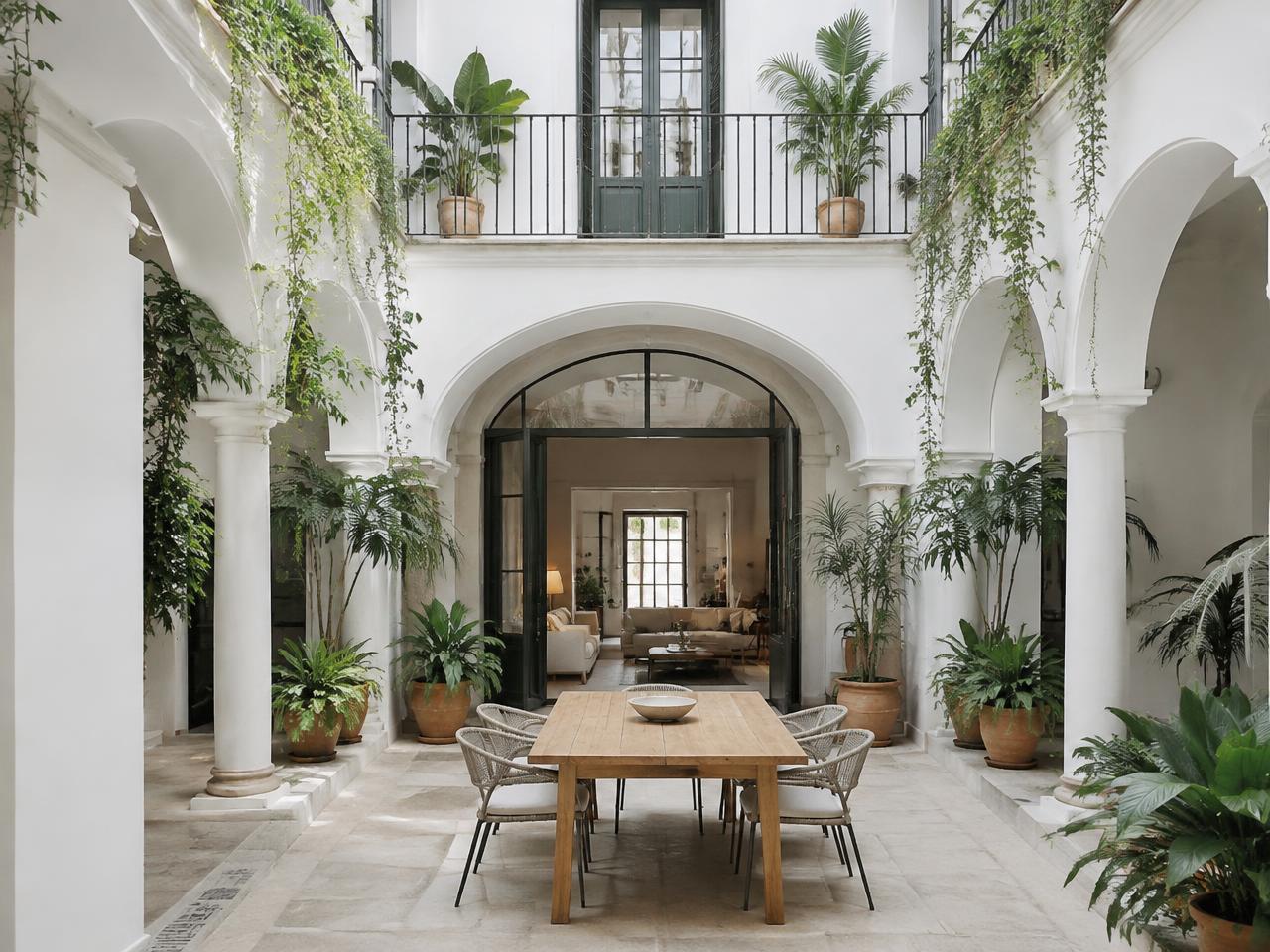
Charm is no substitute for inspection
A courtyard house may appeal because of its light, the relationship between inside and outside, its materials and the way domestic life is arranged. That first impression can also cause essential questions to be overlooked. Before buying, separate what you like from what must be checked: stability, damp, services, ventilation, drainage, roofs and the genuine scope for alteration.
Renovation does not necessarily mean restoring a home to an idealised image. It may involve retaining valuable features, resolving functional problems and adapting the space to current needs while respecting the property’s character. Every house has its own history and conditions; cost and complexity cannot be inferred from appearance or advertised floor area alone.
An initial viewing can identify signs, not provide a definitive diagnosis. If the purchase depends on resolving technical uncertainties, arrange an independent professional inspection before committing. Early checks may uncover priority works and help establish whether the project is viable, needs renegotiation or does not fit the available budget.
Examine the structure, water and building envelope
Water deserves particular attention in a home with a courtyard. Look at gradients, gullies, drains, junctions between paving and walls, signs of leaks and places where water might collect. Ask how the courtyard behaves after rain and what maintenance its features receive. A single stain can have different causes; identifying the source matters more than covering it with paint.
Visually check walls, columns, beams and floors for distortion, cracks or repairs requiring explanation. Not every crack indicates a structural problem, but it is unsafe to dismiss one as superficial without an assessment. Roofs, eaves and façades may have points of water ingress that affect interiors and the durability of finishes.
Windows and doors, seals and ventilation affect comfort and preservation. A house kept shut or poorly ventilated may accumulate damp; an inappropriate insulation upgrade can alter the building’s moisture and heat behaviour. The solution should respond to the specific construction diagnosis, not a generic list of products or improvements.
Understand services and layout
Electrical, water, drainage and heating or cooling services may need updating. Ask about their age, repairs, records and operation; do not assume concealed services are sound because the finishes look well kept. The location of outlets and equipment, and available capacity, shape the design and can significantly affect the budget.
Traditional layouts may have dim rooms, awkward circulation or spaces now used differently. Before designing changes, establish which walls can be altered, how ventilation and daylight will work, and whether new rooms can function comfortably. A courtyard can improve the relationship between rooms, but its orientation, dimensions and exposure determine the result.
Imagine specific routines: cooking, laundry, storage, working, entertaining and maintaining the house. This reveals needs that an empty plan does not. It also helps distinguish essential changes from aesthetic preferences, an important distinction when the budget cannot cover everything in one phase.
Investigate paperwork and conditions for alterations
Before buying, check that the property description matches reality and review available documents on ownership, charges, areas, works and communal elements where applicable. Differences between plans, the land register, cadastral records and the physical condition should be clarified with suitable advice. Missing documents do not in themselves prove a problem, but may prevent the transaction’s scope being assessed with confidence.
Renovation options may depend on planning conditions, heritage protection, plot configuration, easements and applicable rules. An appealing idea — opening an aperture, raising a roof, changing a room’s use or increasing floor area — must not be assumed to be authorised without consulting professionals and, where appropriate, the relevant authorities. Requirements vary by property and location.
Ask about previous work and, if possible, request plans, licences, certificates, invoices and available warranties. Check answers against documents and do not base the purchase solely on verbal promises about what can be done. Professional verification beforehand can reveal conflicts between the imagined project and actual conditions.
Budget in phases and allow for contingencies
A useful budget separates diagnosis, essential work, comfort improvements, finishes and equipment. It should state what each item includes and excludes, the measurement basis and conditions that could change the price. Where walls or floors have not been opened, some quantities remain provisional: acknowledge this explicitly and reserve funds for surprises.
Prioritising means addressing safety, water, structure and services first, followed by improvements that depend on those decisions. Choosing finishes before understanding the roof or drainage can cause rework and avoidable expense. If the project is phased, each phase should leave the home in a coherent condition without jeopardising later work.
Compare proposals on an equivalent scope, not just the final total. Ask who co-ordinates the work, how changes are managed, what records are provided and how damage to features intended for retention will be prevented. A contractor or professional can advise on their own offer, but the buyer must understand the items and assess whether there is enough financial headroom.
Consider the courtyard, materials and maintenance
A courtyard is a living space requiring ongoing attention. Paving, drainage, planting, irrigation, joinery and surfaces exposed to sun or rain all need maintenance. Choose plants and materials with the local climate, water availability, shade and ease of upkeep in mind, not just their appearance on day one.
Existing materials may have functional or constructional value and could merit repair rather than replacement. Before removing tiles, finishes or joinery, ask whether they can be recovered, whether they conceal problems and what retention would involve. Compatibility between old and new materials matters: an excessively impermeable or rigid solution can worsen defects in some building systems.
Consider privacy, security, lighting and everyday use too. A balanced design maintains a connection with the interior while providing comfortable areas in different conditions. There is no universal recipe: orientation, proportions, surroundings and residents’ habits should guide decisions.
Decide before committing
An organised review may lead to one of three conclusions: buy with a defined scope of work, negotiate on the basis of verifiable findings, or withdraw if the risks exceed what is acceptable. To reach a decision, list questions, request documents, visit with specialists and turn observations into work items and priorities. Any remaining uncertainty should be identified, not hidden in an optimistic budget.
The right house is not necessarily the one that seems ready for a spectacular transformation. It may be the one with verifiable conditions, a feasible project and maintenance demands compatible with the time and resources available. Sometimes preserving a layout or traditional solution is more sensible than forcing the property into a preconceived image.
Buying a courtyard house to renovate means looking beyond its charm: water, structure, services, paperwork, permissions, budget and maintenance are interconnected. An assessment beforehand cannot eliminate every surprise, but it helps quantify them and make a considered decision. The aim is to buy a home whose potential can become a viable project, not a promise based solely on a first impression.
Explore our architecture and engineering services or discuss your project.